
 Corporate
 25/06/2026
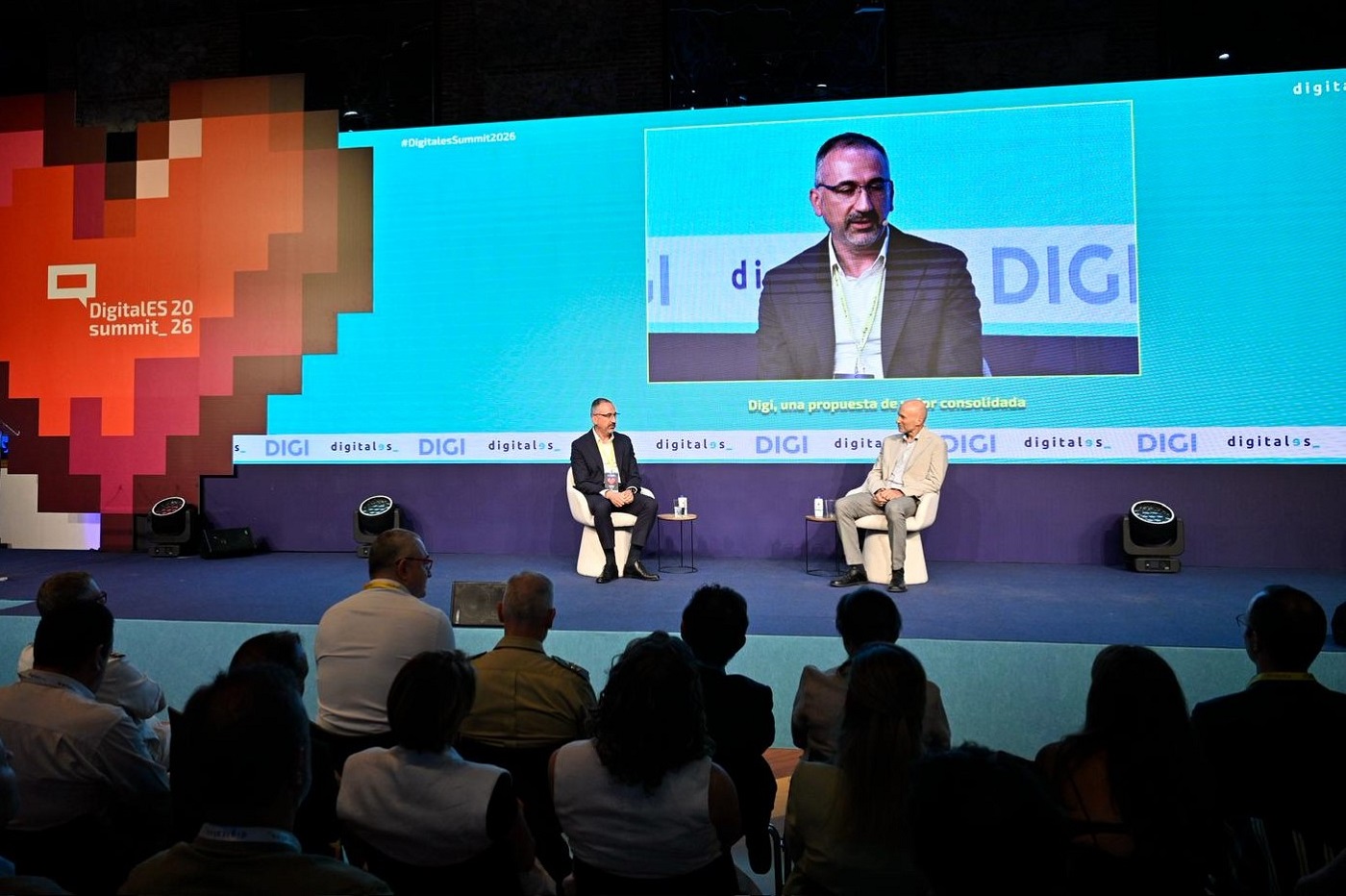
Marius Varzaru, CEO of DIGI in Spain, emphasized during his participation in the DigitalES Summit 2026 that “the combination of investment, technology, operational efficiency, and customer focus has been the key to consolidating DIGI's value proposition; a proposition built to offer quality connectivity, accessible to everyone,” and which has led the operator to become “the third largest residential broadband provider in Spain.”
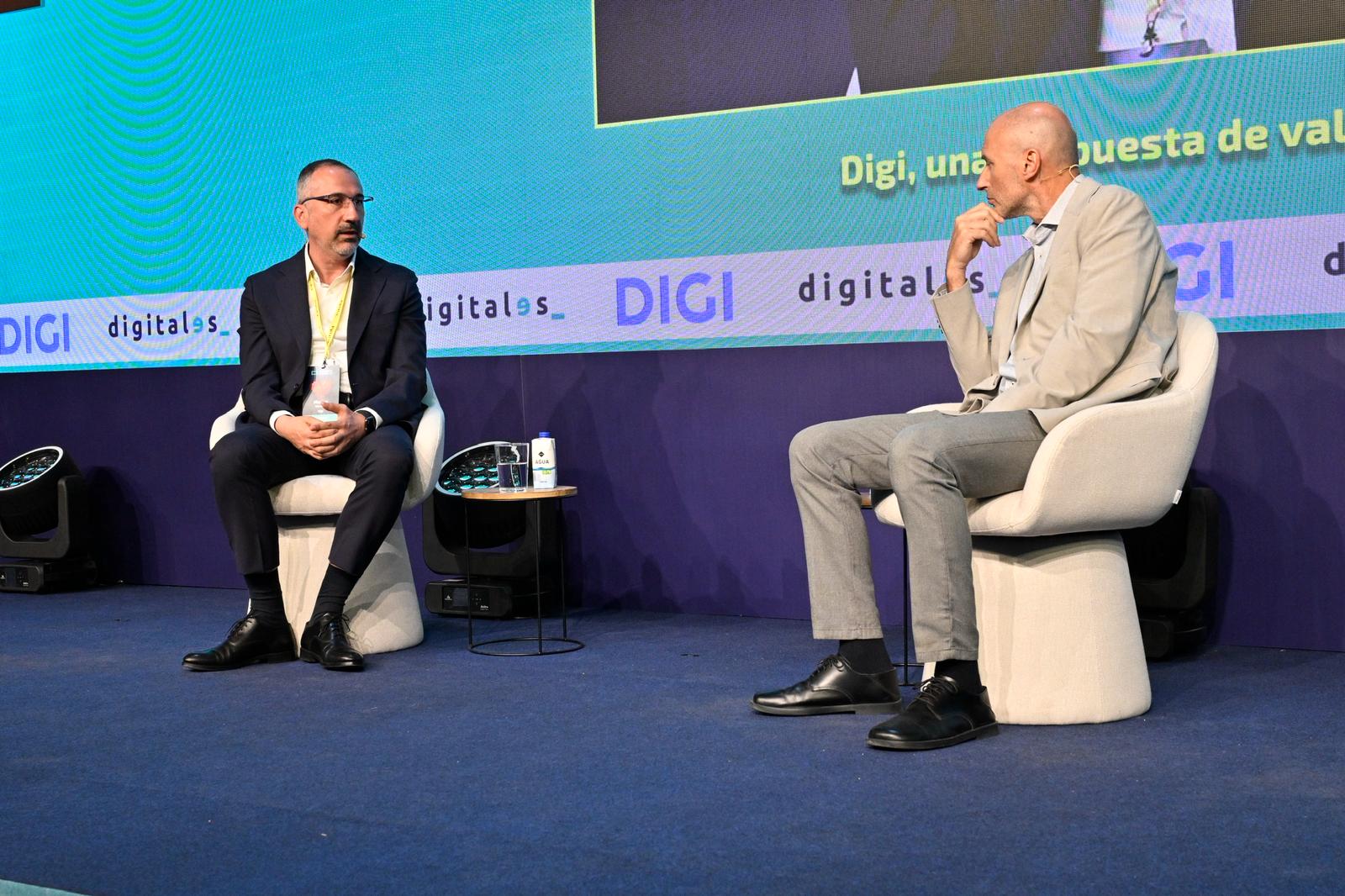
In an interview with Antonio Lorenzo, a journalist from El Economista, Varzaru reviewed the past year, highlighting DIGI's growth, which now reaches 11.4 million customers across all its services.
Specifically, he stated that DIGI has deployed Smart Fiber to 14.2 million homes and is working towards reaching 21 million homes by 2030 at the latest. He also emphasized the acceleration in net fiber customer growth year after year—from 268,000 in 2021 to 574,000 in 2024 and 625,000 in 2025—thanks to the increased deployment of the Smart Fiber network. Thus, Varzaru emphasized that the growth of the last three years has been in the Smart network, “which highlights and validates the strength of our business model, a model in which investment in our own networks is the engine of the company's growth. This growth is supported by our Smart network, our advanced technology, and operations carried out with our own employees, allowing us to offer a highly competitive service in terms of quality and price, which is made available to customers in a transparent and personalized manner.”
Furthermore, he explained that the growth of fixed broadband boosts the growth of mobile services. In the last year, 80% of new mobile subscriptions were lines contracted in conjunction with fiber optic services.
On the other hand, regarding the mobile network, Varzaru highlighted that “we are approaching the one-year anniversary of the start of the mobile network rollout.” Currently, there are already more than 1,100 active antennas, out of the 10,000 targeted for 2033, and these antennas are already handling traffic from DIGI customers, primarily in cities with more than 250,000 inhabitants.
"We still have a long way to go to reach our goals, but we also have great ambition and the certainty that this project will continue to grow in the same way as it has been," he emphasized.
Investment, Regulation, and Employment
On the other hand, when asked about the MARCo regulations, Varzaru stated that, from DIGI's perspective, "the MARCo regulations have created jobs, more than 11,000 positions".
“The MARCo framework has been the main factor in our country’s success in advancing fiber optic deployments, transforming Spain into a world leader in this area,” stated the CEO of DIGI, explaining that “the MARCo framework is essential for the continued deployment of fiber optic networks, including in rural areas, and for allowing investment to be directed towards technological advancements such as the evolution to 10Gbps.”
He also considered that “the obligation to provide access to this infrastructure, including the cost at which it should be compensated, remains a critical aspect for the evolution of our country’s telecommunications industry in the coming years, and we are confident that the new MARCo framework will take into account the contribution that the current framework has made to Spain’s economic development.” To execute its plan to deploy next-generation, ultra-fast fiber optic networks, and also to implement its own mobile network, the operator invested a total of €119 million in the first quarter of the year, 35% more than a year earlier.
DIGI achieved revenues of €929 million by the end of 2025, a 19% increase compared to the previous year, and reached an EBITDA adjusted for operating leases of €175 million, registering a 15% increase compared to 2024. According to the latest data, it billed over €252 million in the first quarter, representing a 16.4% increase compared to the same period of the previous year, and recorded an EBITDA adjusted for operating leases of €50.6 million, registering a 47% increase compared to the same quarter.
Furthermore, DIGI is the second largest operator in terms of number of employees and, in addition to maintaining its commitment to investment in its own networks, also maintains its commitment to employment.
The operator, which integrates the entire value chain, carries out all business activities directly with its own employees, offers a stable career path, and fosters career development plans for all its employees. In total, DIGI has over 11,700 directly employed professionals, including infrastructure personnel for the deployment of its own fiber network and its own call centers.
DIGI, a customer-focused company
DIGI offers high-quality products with a very attractive value proposition of fiber over XGSPON and Wi-Fi 7 networks. For the last five consecutive years, it has been recognized as having the fastest fiber network in Spain, according to the prestigious Ookla awards. Furthermore, it leads the residential market technologically with the deployment of its 10Gbps network.
"We are always planning the long-term evolution of our networks, taking into account potential future growth and focusing on robustness, quality, and sufficient capacity. Our customers' satisfaction with the services we offer is reflected in our Net Promoter Score (NPS), which has given us over 60 points, leading the market for the last five years," he concluded.
